

Stop paying for a ship to wait for the weather.
Offshore, eighty to ninety percent of maintenance cost is access. One resident robot per foundation, platform and riser inspects the splash zone on every sweep and rides out the storm clamped to the steel.
TODAY: A LOGISTICS BUSINESS WITH SOME ENGINEERING ATTACHED
$38k/day
A service operation vessel for a wind farm charters at about $38,000 a day before fuel, carries fifty to a hundred people and stays out for four weeks at a time. A diving or ROV construction vessel costs several times that. Every task on the structure, from a cathodic-protection reading to scraping mussels off a boat landing, is priced in vessel days, and the vessel is paid whether or not anyone can step onto the ladder.
The world’s 12,000 oil and gas platforms are ageing: the North Sea fleet averages twenty-five years, more than 1,500 Gulf of Mexico platforms are over thirty, and 2,800 fixed platforms are due for removal by 2030. In offshore wind, grouted-joint failures hit 35–40% of monopiles built before 2012.
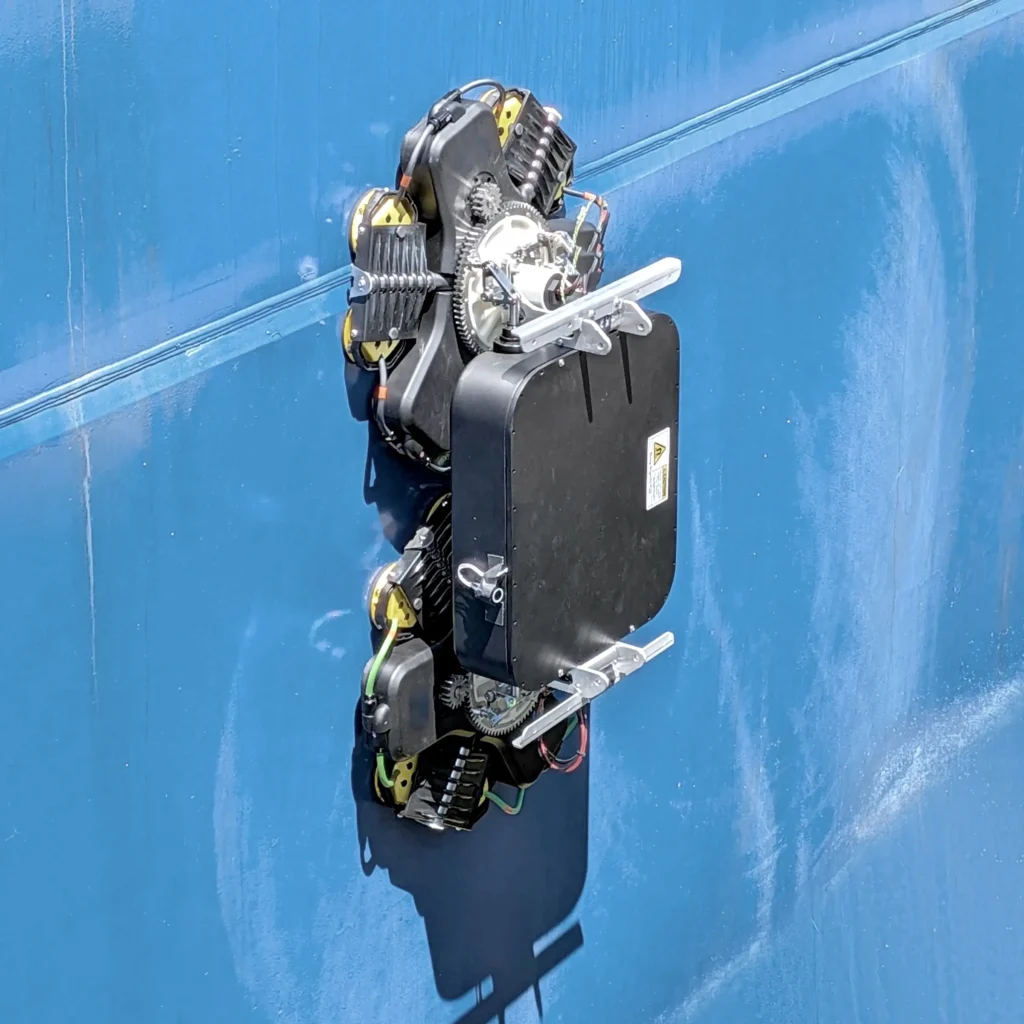
The most aggressive environment on the structure, the splash zone, is the least inspected: rope access from above and ROVs from below meet poorly in the middle. Gobo’s robots, with their superior adhesion strength, are perfectly suited to handle this task.
How we help today: the crawler that stays behind
Robots already have a share here: the ROV replaced the diver a generation ago and crawlers now clean marine growth and inspect splash zones. All of them arrive on a vessel, do their campaign and leave with it. Gobo’s robot does the same campaign work, and then stays on the structure after the vessel sails.
And from then on: the structure that inspects itself between storms
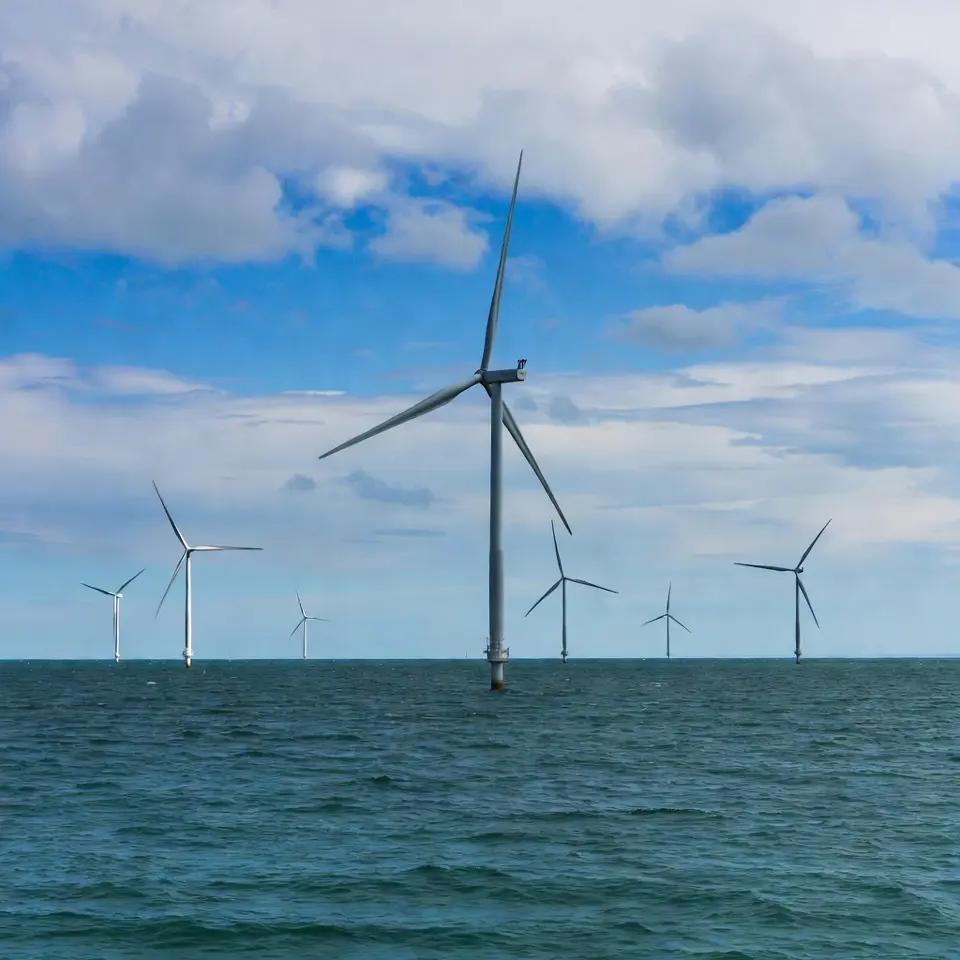
A 1 GW wind farm has a hundred and more identical foundations fifty kilometres offshore. Put one resident robot on each transition piece with a dock and a charger. Between weather windows it brushes growth off the boat landing before it hardens, descends through the splash zone mapping coating and wall loss, continues to the mudline reading anodes and welds, and clamps on at zero power when the storm comes.
The farm’s integrity record is built foundation by foundation, year on year, by the same instrument on the same steel, which is what certifiers, insurers and lenders ask for and campaign reports cannot provide.
On an ageing North Sea jacket the same robot is the life-extension case: a continuous history of the risers and nodes instead of a sampled survey every few years, and five more years of production argued from evidence.
platforms, plus 92.5 GW of offshore wind
replacement value
spent on maintenance every year
spent on inspection every year