

A hull that never fouls.
Ships waste $30 billion a year pushing barnacles through the sea. A robot that lives on board grooms the hull every two weeks, before slime becomes barnacles, and never scratches the paint.
TODAY: THE THIRTY-BILLION-DOLLAR BARNACLE
$30bn
of fuel wasted every year pushing fouling through the sea
The IMO’s own data: a 175-metre bulk carrier with half a millimetre of biofilm burns 25% more fuel; a 320-metre tanker with barnacles on just 1% of its hull burns 55% more. Of the fleet’s $300 billion fuel bill, $30 billion is wasted on fouling.
The diver’s cart that finally scrapes the barnacles off also scrapes off the antifouling coating and releases a copper plume, which is why ports from California to New Zealand have banned in-water cleaning and the IMO is writing a binding rule.
Ardmore Shipping’s assessment: a permanent onboard robot would cut the fleet’s fuel bill by 10 to 14%.
The US Navy, with a drydock backlog measured in thousands of ship-days, placed Gobo’s first $2 million order.
Why a faster drydock is not the answer
Periodic aggressive cleaning damages the valuable ship coating and degrades vessel performance. The solution is frequent gentle cleaning; this is only possible with robots that are permanently on the vessel.
The rethink: the ship that grooms itself at sea
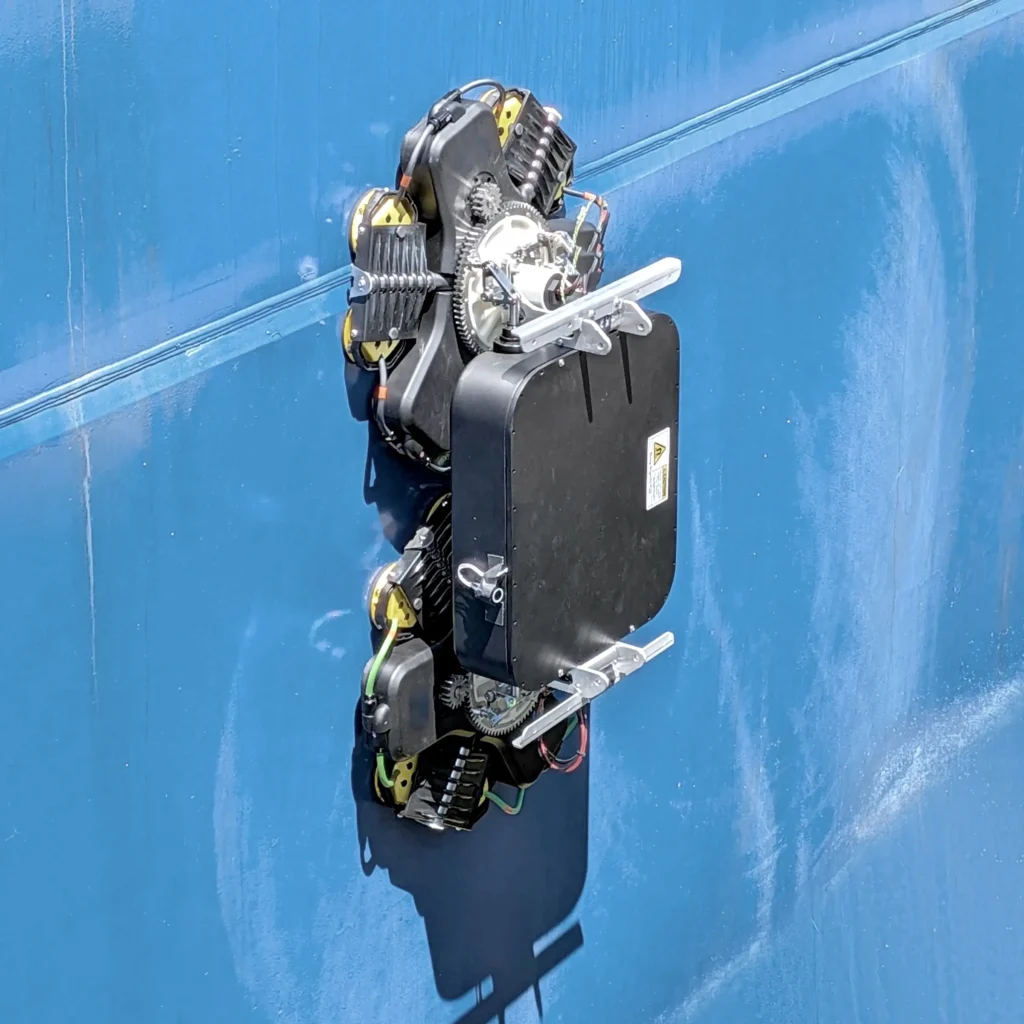
The resident robot walks the wetted hull every two weeks with a soft brush at about 10 kilopascals, enough for slime and juvenile barnacles and never enough to harm the coating. The hull stays at ‘light slime’ for the whole docking cycle; the fuel penalty never accrues; the antifouling lasts its full life.
A twenty-ship operator pays about $2 million a year and saves about $10 million in fuel. A navy inspects a hull that may have been tampered with in a foreign port without putting a diver in the water.
ships over 5,000 GT
world fleet value
spent on hull maintenance every year
spent on inspections every year