

No scaffold. No dose. No dewatering.
Boilers, containment liners and penstocks are inspected by sending people where people should not go. Robots that live inside the plant make every outage a planned one.
TODAY: SCAFFOLDS IN THE DARK, DOSE ON THE CLOCK, AND A PENSTOCK FULL OF WATER
3 hrs
to inspect a penstock underwater, instead of three or four days drained
Boiler tube leaks cause more than half of forced outages at coal plants, each costing on the order of a million dollars a day. To inspect the tubes a crew waits days for the furnace to cool, spends days scaffolding a fifteen-storey firebox, and spot-checks a small fraction of the tubes before the scaffold comes down again.
In a nuclear plant the constraint is dose: every critical-path day of a refuelling outage costs more than a million dollars, and the industry’s history includes workers who absorbed a year’s legal dose in a minute’s work inside a steam generator. Westinghouse’s robotic under-head inspection at Beaver Valley saved more than a million dollars of outage time.
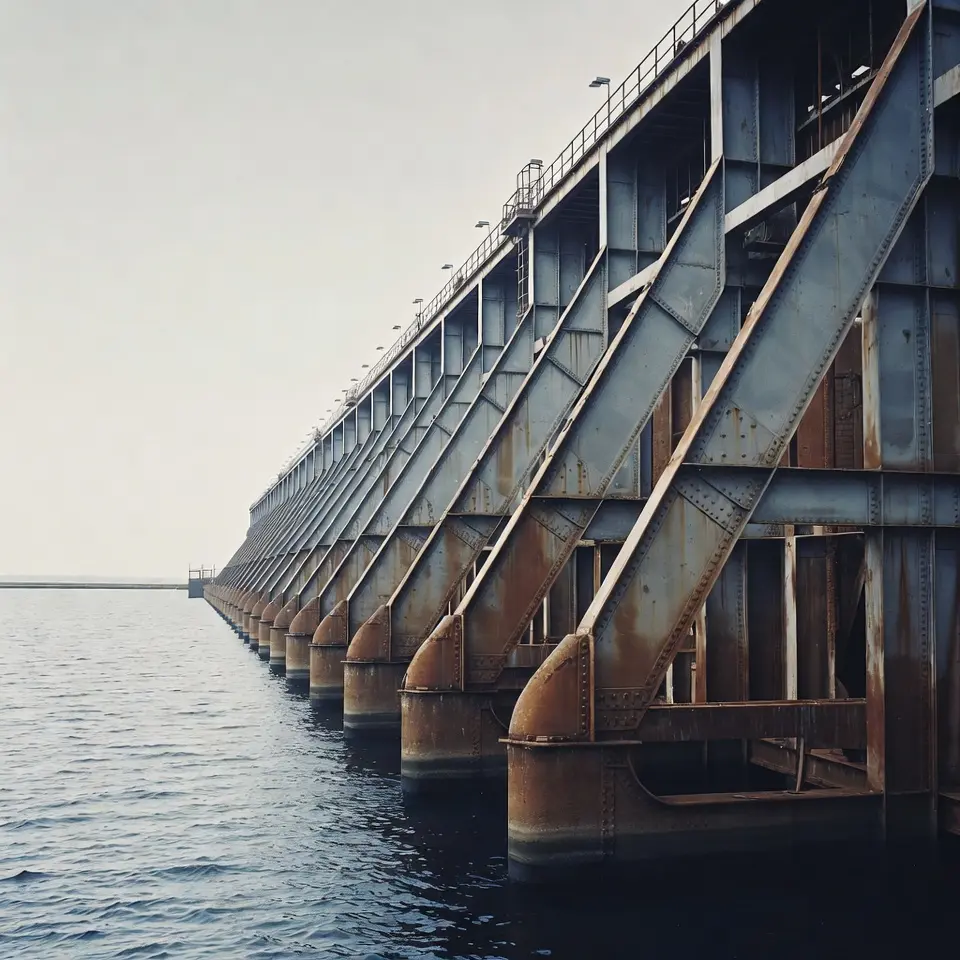
To look inside a kilometre-long penstock the owner drains it, stops generating for days, and lowers inspectors on winches into a wet, dark pipe. In 2026 a New Zealand operator’s underwater robot cut that to about three hours, without dewatering. Électricité de France alone runs 250 kilometres of penstocks and 5,600 steel gates.
How we help today: a crawler that arrives with the outage
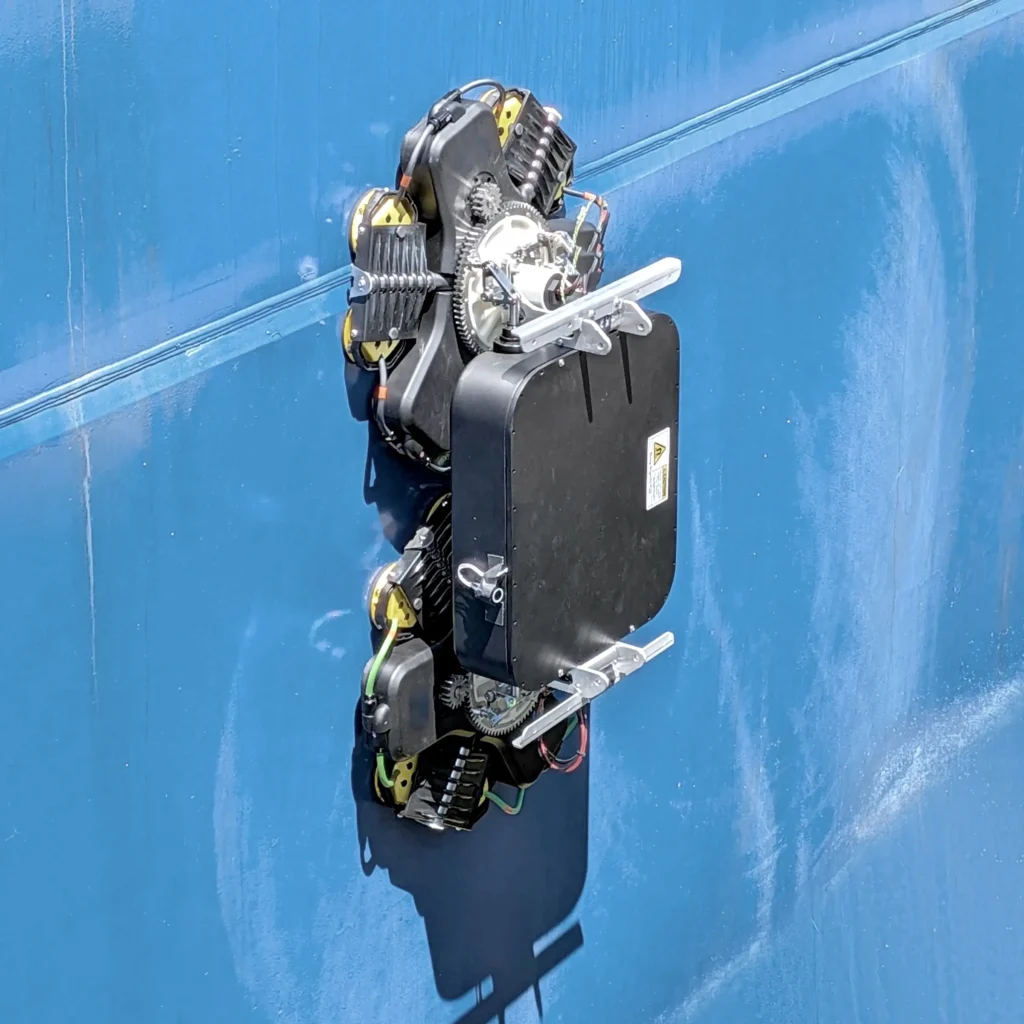
Wall-climbing crawlers already inspect a boiler, analyse the data and plan repairs inside an eight-hour window. Purpose-built machines strip and recoat penstocks with no one inside. Gobo’s robot does that work during the outage, and then stays behind for the next one.
And from then on: the outage that is planned from a map
A robot stored inside the boiler wakes at every cool-down and walks the waterwalls before a scaffold would have gone up, measuring every tube at the same points as last time, so tube replacements are planned, ordered and done in the window rather than discovered by the next leak.
On tanks, ducts, stacks and cooling-tower steel, which are always accessible, resident units give year-round thickness and coating trends and touch up paint as they go. In a nuclear station every sweep of the containment liner is dose a person did not receive, and the evidence for an eighty-year licence accumulates as a by-product.
In the penstock, a robot that walks the interior under head measures thickness and coating, images the welds and touches up the lining, so dewatering becomes a rare, planned event for repair rather than the routine price of looking.
of generating plant
fleet replacement value
spent on O&M every year
spent on inspection every year